
Florence ~ Un Cappuccino e Cornetto, per Favore
"Un cappuccino e cornetto, per favore." This was my typical breakfast order throughout Italy. Simple, but it gave me everything I needed to start my day. I have never been much of a breakfast person, usually something simple alongside my morning coffee. I'm also more of a night owl than an early riser. Early mornings have never come naturally to me. When I travel, all of that changes. Some mornings I am up before the sun, grabbing my camera to catch the city as it wakes. Other days I stay out well past dark to catch the sunset and watch the city come alive at night. There is no real schedule when I travel. I just try to balance the late nights and the early mornings so I get enough rest to keep going.
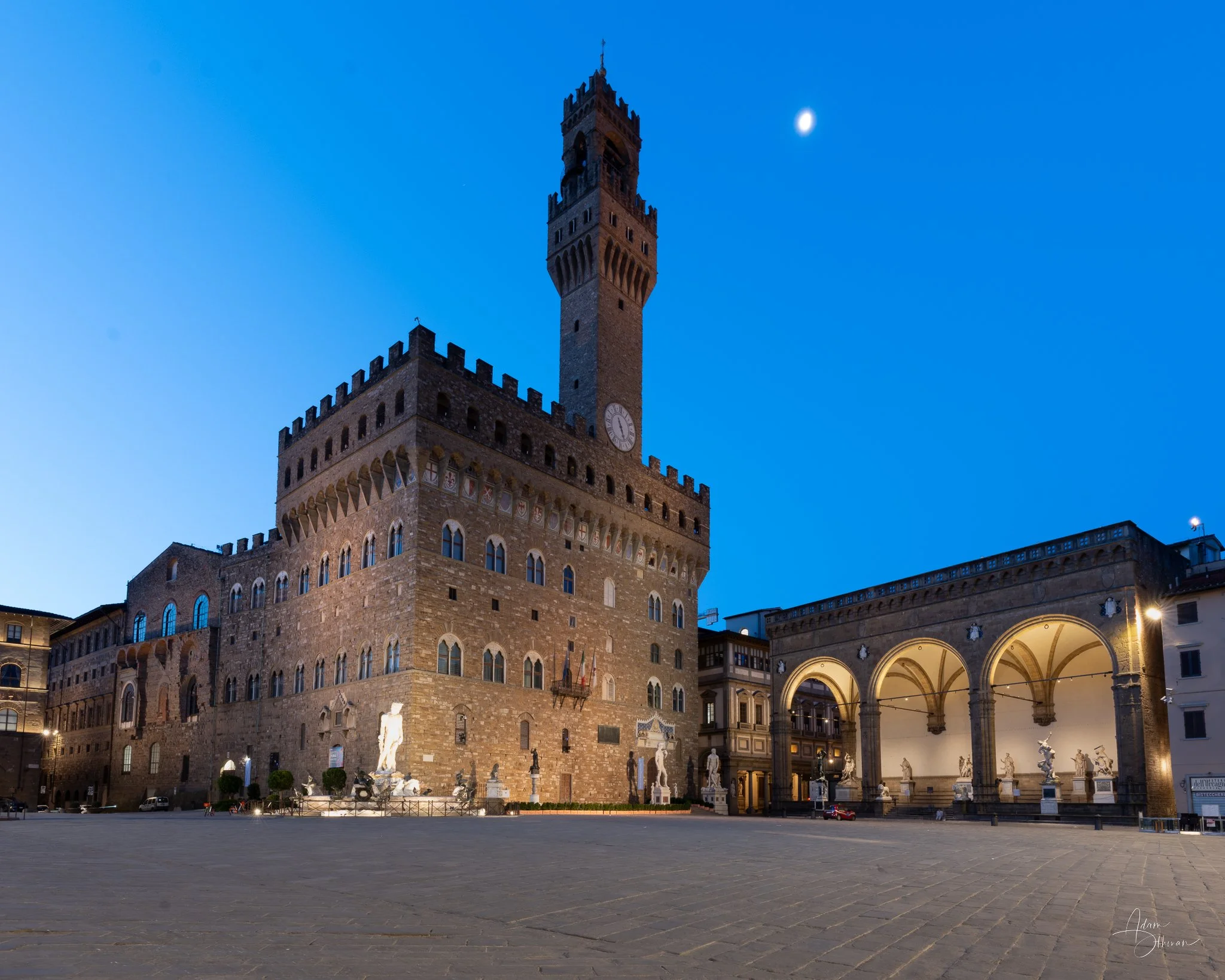
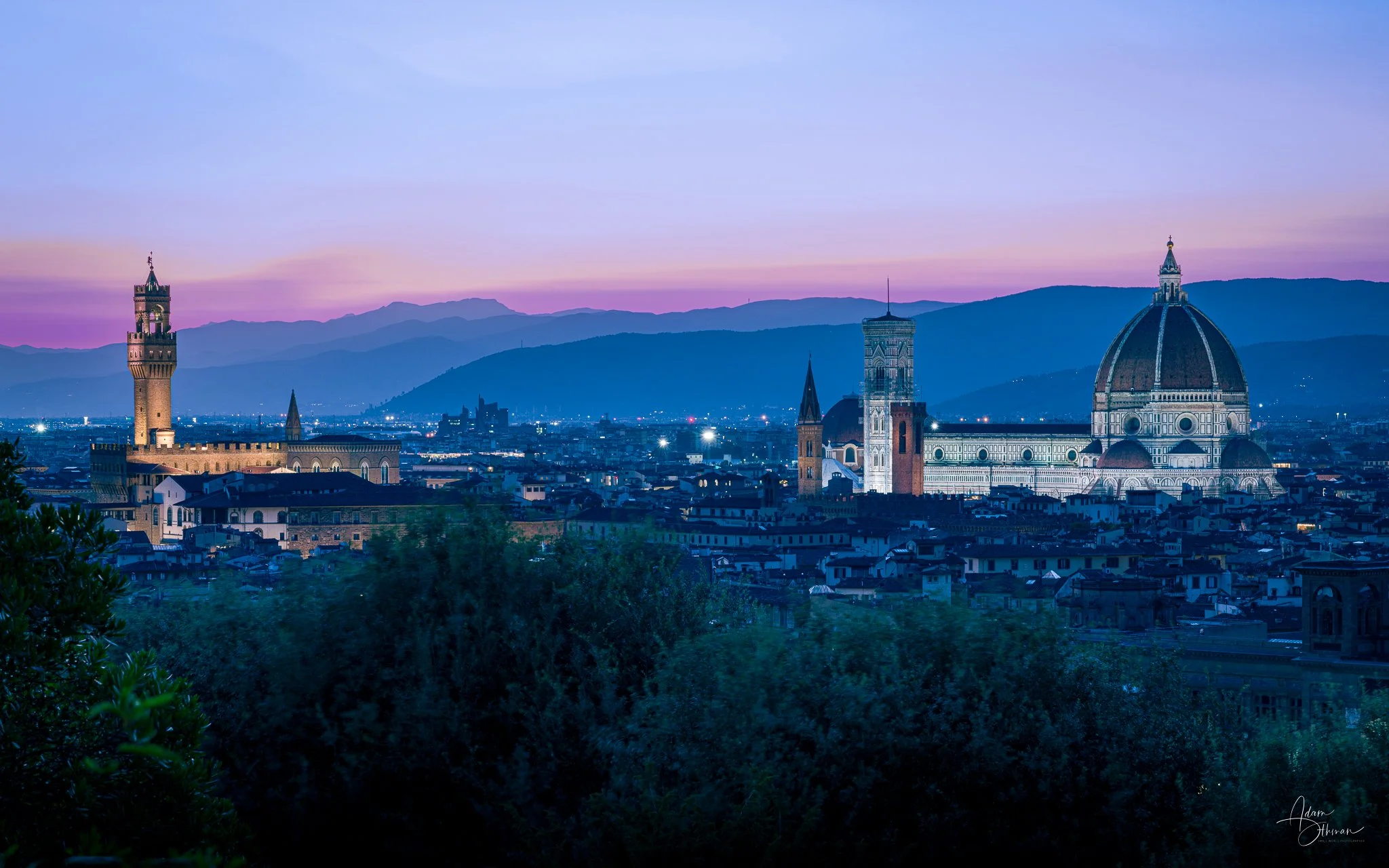
Florence is one of my favorite cities to explore. Every time I return, I discover something new. From the paintings and sculptures to the cobblestone streets and architecture, you feel like Florence never really left its golden age behind. The Uffizi Gallery is where I could spend hours on end wandering its rooms and admiring the masterworks by Botticelli, Da Vinci, and Michelangelo. The Birth of Venus is the piece that stops me every time, the movement in the fabric and hair almost making it feel alive. I walk through museums slower than most visitors. When I look at a painting, a sculpture, or any piece of art, I take my time with it, studying the facial expressions, the poses, the colors, the way light falls across the piece. That's when the story starts to come through. Standing that close to it, in person, it never stops being humbling.
After a few hours wandering the gallery, I took a tour through the Vasari Corridor, the walkway connecting the museum to the Pitti Palace. It let the Medici and other prominent Florentines cross above the Ponte Vecchio without mixing with the shops and gold merchants doing business below. Walking through the corridor and looking down at tourists shopping for treasures, you get a real sense of just how much power the Medici family held.
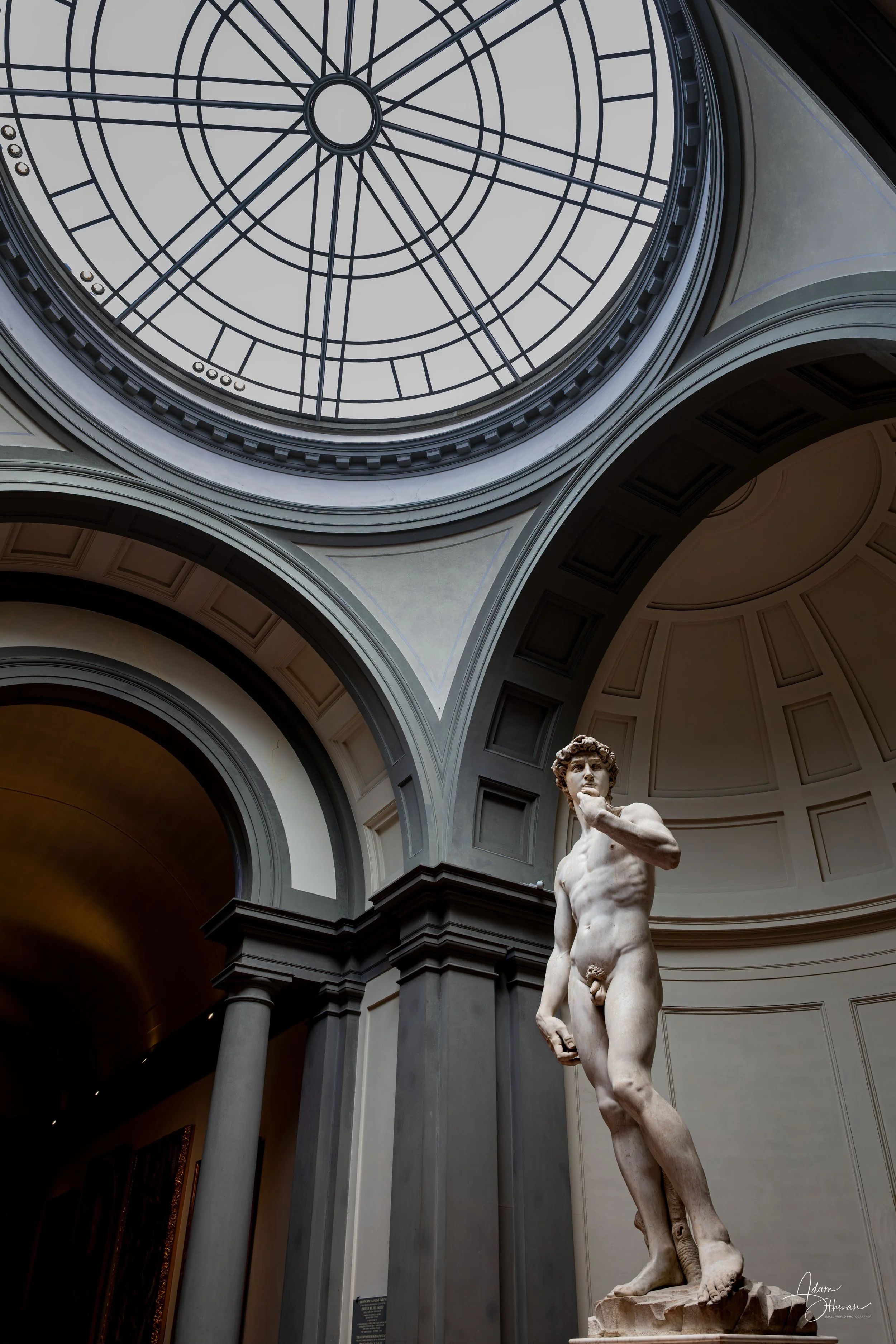
No trip to Florence is complete without seeing Michelangelo's David at the Galleria dell'Accademia. Standing in front of David, you understand why it has become the symbol of the city. The scale alone is startling, over seventeen feet of marble, but it's the detail that stops you: the veins in his hands, the tension in his stance, the expression right before the fight. I walked around David slowly, photographing it from every angle, zooming in to capture detail. Luckily the pedestal holds David over seven feet above the ground, allowing photographers like me to get some creative shots over the heads of all the admirers.
Days were spent wandering through shops and visiting churches. This time I visited the Basilica of Santa Croce for the first time. Michelangelo and Galileo are both buried there, and there is a beautiful cenotaph honoring Dante, who is actually buried in Ravenna, where he died in exile. Walking past tomb after tomb, you start to realize how many of the names that shaped the Renaissance all led back to this one city.
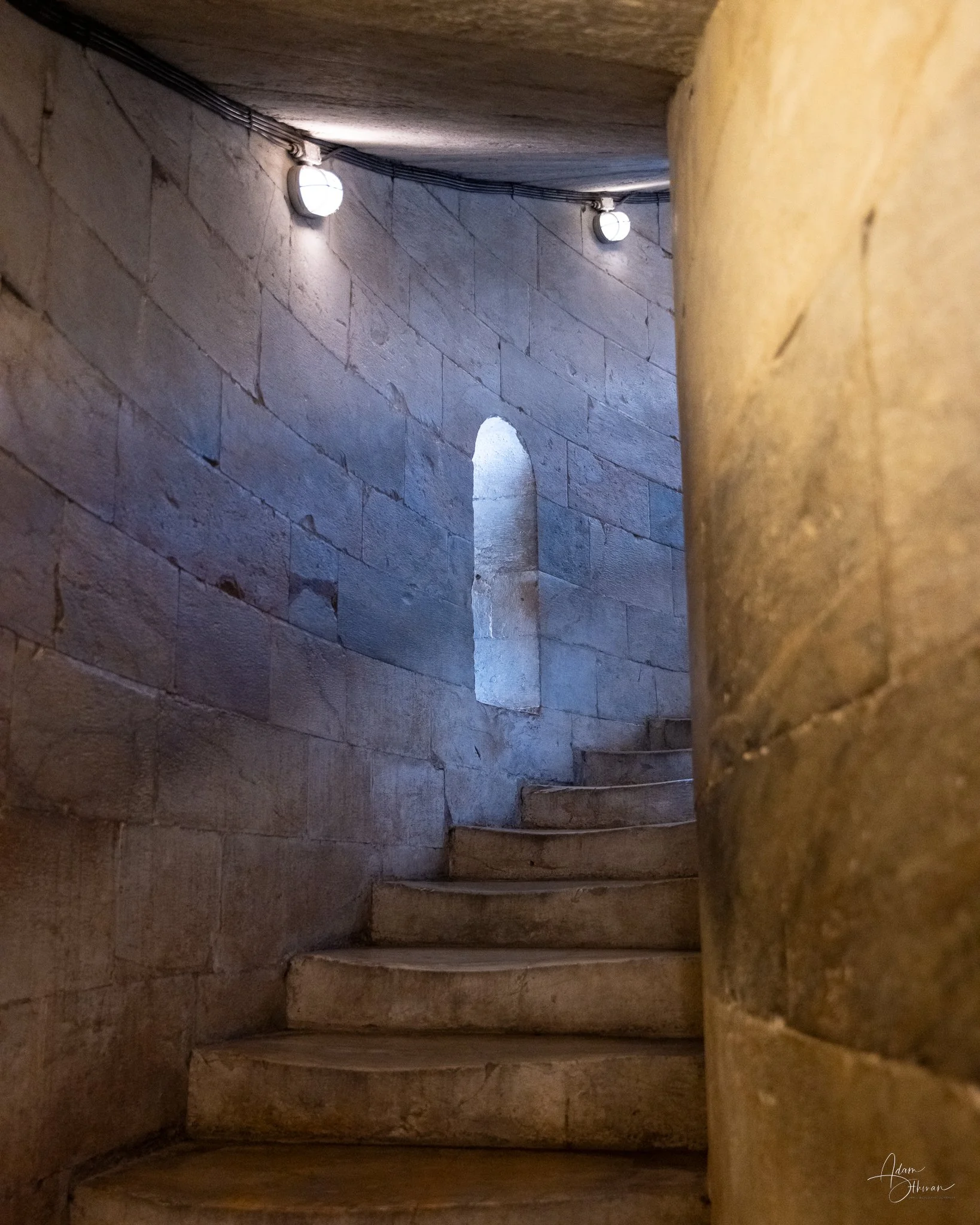
Pisa was a morning trip from Florence. It had been 24 years since my last visit, and even though I have seen it before, walking down the street and catching that first tilted silhouette leaves me in awe. I booked the earliest slot to climb the tower. Walking up the nearly 300 steps, your footing never quite settles. You climb slightly right, then slightly left, uphill then down, following the lean the entire way. Once you reach the top, the views of Pisa are extraordinary. This early morning climb gave me a few quiet minutes to take it in with only a handful of other people around. It is remarkable, the engineering it has taken over the centuries to keep this tower standing, or rather, leaning. I spent the rest of the morning at the cathedral, the baptistery, and the other buildings on the square. By noon the whole site was packed, so I headed back to Florence for a late lunch and to edit photos.
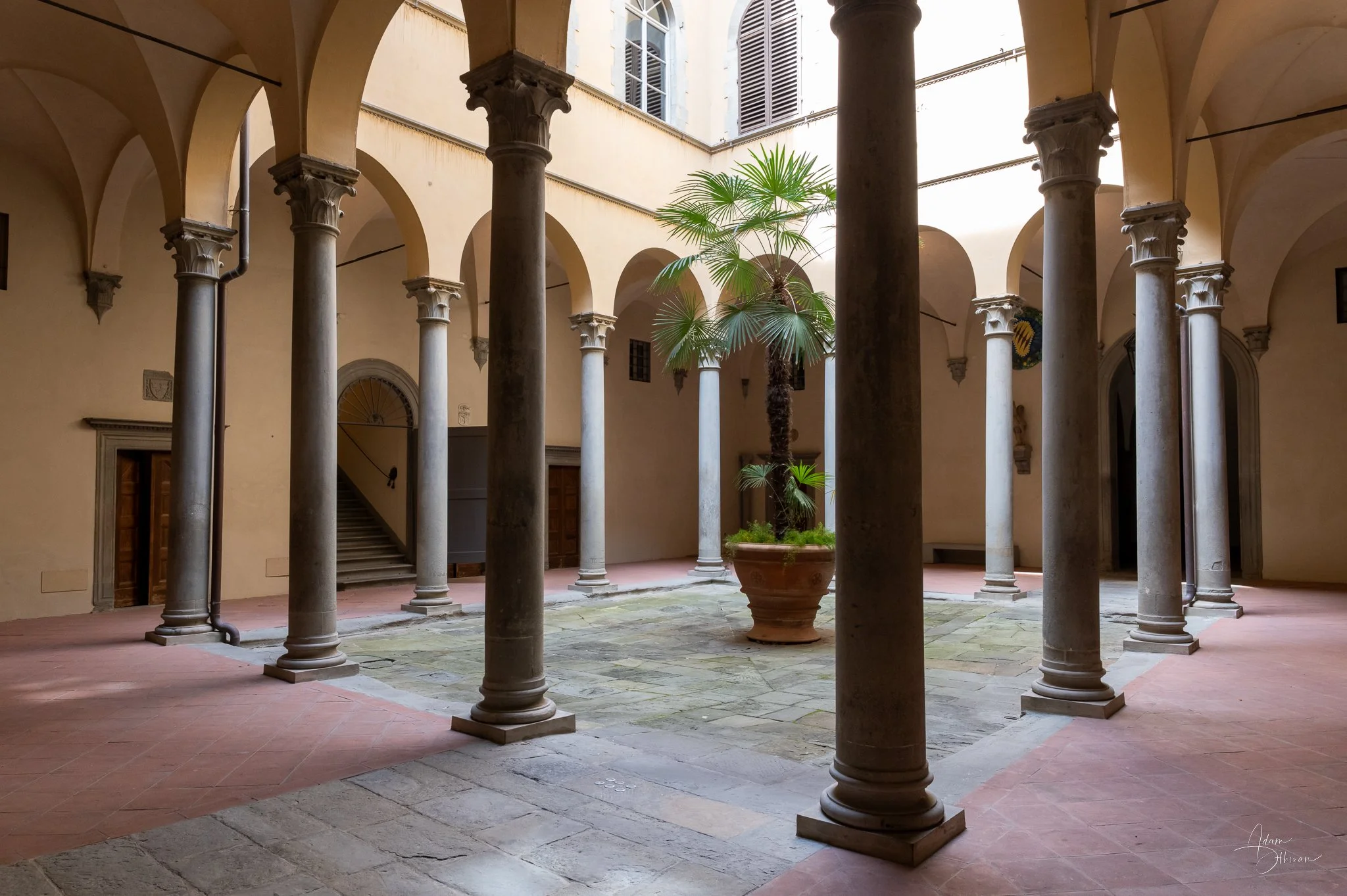
The apartment I stayed in also has a great history. The Palazzo Busini Bardi is a 15th century palace, once home to Count Giovanni de' Bardi, who gathered a circle of poets, musicians, and thinkers there. This is the palace where opera was born, in a small theater that once occupied the top floor. Now converted into apartments, the location is perfect, within walking distance of all the historical sites. Every room has arched ceilings and large windows looking out over the courtyard below. The building also houses a restaurant I make a point of returning to every time I'm in Florence. La Buchette is a traditional Florentine restaurant set in the palace's old wine cellar. The food is better than just delicious, it is delectable, from the perfectly cooked Florentine steak to the handmade pasta with pecorino and shaved truffles. The staff is gracious and takes excellent care of you.
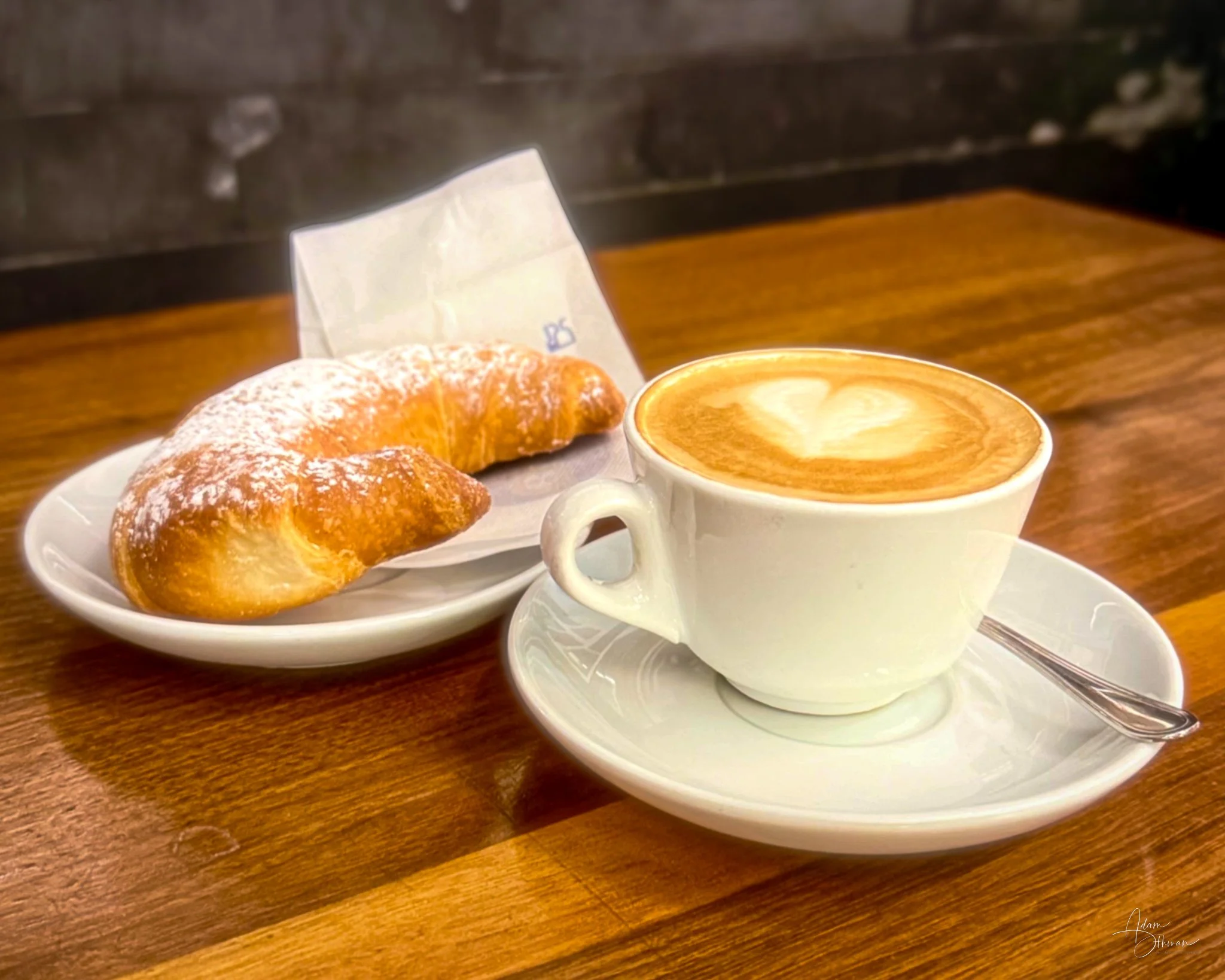
I started this entry with my breakfast order, "Un cappuccino e cornetto, per favore." Simple and perfect, but what I love most is what lies beneath the simplicity. The cappuccino is made with espresso brewed to perfection topped with milk that is silky and light. The cornetto, Italian for croissant, is fresh and flaky, and a good one takes the baker hours to get the balance of dough and butter just right. Once you place your order you can stand at the counter or take a seat and stay as long as you like, and no one rushes you either way.
That same unhurried care showed up everywhere I went. In the shopkeepers taking their time to open up properly each morning. In the waiter who stopped to actually talk instead of just taking my order. In a two hour dinner where no one ever hinted it was time to leave and encouraged you to stay. Nothing about it was fast, and nothing about it needed to be. It's not about doing more. It's about doing the simple things well, and letting them take the time they take.