
Wherefore, Verona ~ Discovering Shakespeare’s Imagination
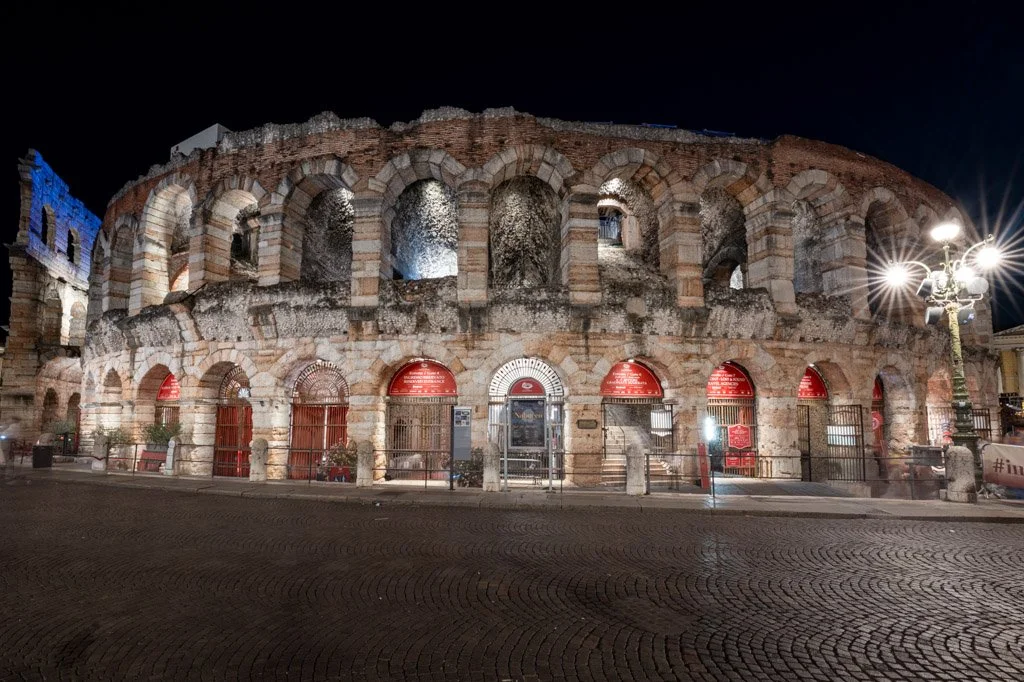
When I plan a month-long excursion, I balance the itinerary with a mix of large cities with smaller places that tend to get overlooked by most travelers. There are many wonderful cities and towns in northern Italy to explore, but the one that caught my eye was Verona. Before this trip my primary knowledge of Verona was that it is the setting of Shakespeare's Romeo and Juliet. When I researched the town a little more I knew it was a city worth visiting, from the first century Roman Arena to the architecture of the old town to strolling through the piazzas and markets. It felt like exactly the kind of place worth a few days. But if I am being honest, it was Shakespeare that brought me here.
In seventh grade at St. Joseph's School we were each allowed to choose one elective course. There were many that caught my eye. My first choice was Movie Making, followed by an Introduction to Computing, and a distant third was Shakespeare. The first two were popular choices, so I found myself in the Shakespeare course. I was not thrilled at first, but the class was taught by one of my favorite teachers, Mr. Monroe, and that changed everything. The first play we read was Romeo and Juliet. Mr. Monroe did not have us sit quietly with the text. We read it aloud, on our feet, with cardboard tubes as swords and scenes loosely staged around the room. He asked me to read Benvolio, Romeo's cousin and closest friend. In hindsight that was the perfect role for me. As an actor I have often been cast not as the lead, but as the best friend, the confidant and sidekick type roles. We were twelve and thirteen years old and did not always understand every word, but Mr. Monroe made sure we understood the heart and emotion of the story. Romeo and Juliet is a perfect first introduction to Shakespeare for students because young people connect with it. Teenage characters misunderstood by their families, falling fast and hard in love. Like most of Shakespeare's works, it is relatable and timeless.
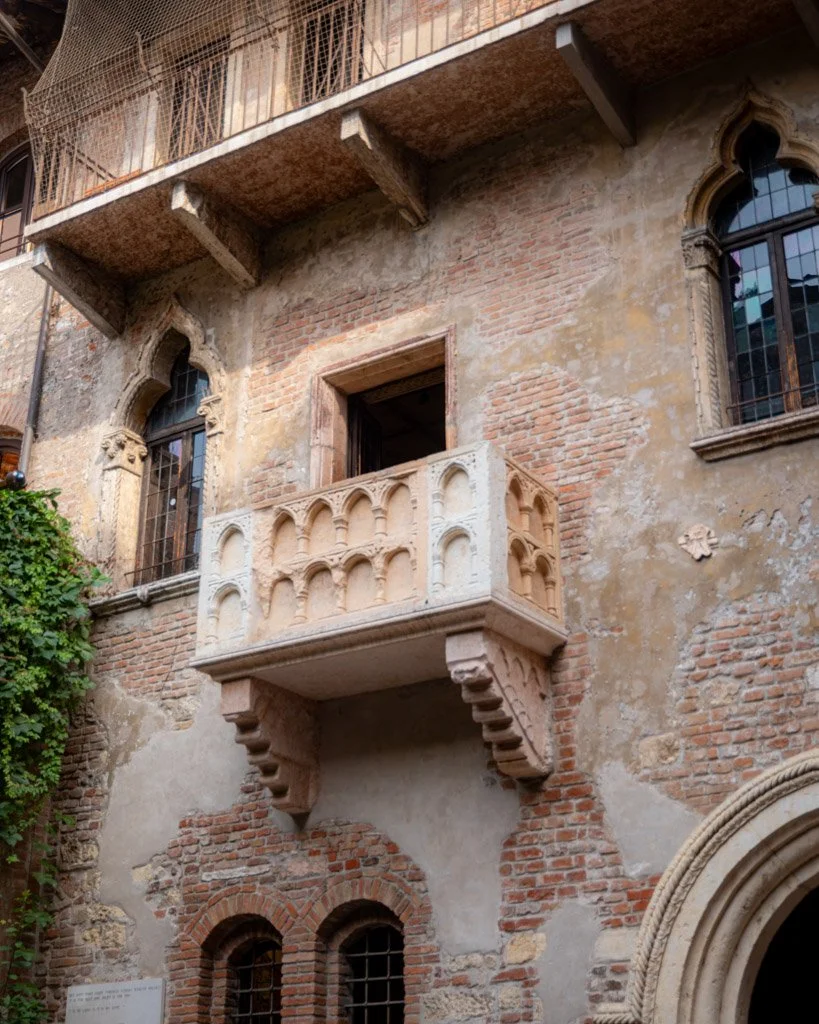
I have loved Romeo and Juliet since seventh grade and throughout my life as a theatre director and teacher, I have taught the play and staged the scenes. So walking through the streets of Verona decades later felt like more than sightseeing. The stone walls, terracotta roofs, large windows and balconies overlooking courtyards, the narrow streets curving toward the center of the historic city. It is easy to let the imagination run here. These are the streets where Romeo wandered, where Benvolio tried to talk sense into his friend, where two families carried a feud that neither could remember starting.
At the center of the historic town sits the Roman Arena, one of the oldest and best preserved in Italy. I attended a performance of La Traviata inside the Arena on a very hot evening. Temperatures had reached 97 degrees during the day, but by the time the performance began a gentle breeze had settled in. The voices of the performers were extraordinary and the staging was innovative and captivating. It was a sold out performance and I was lucky a few weeks ago when I purchased one of the last remaining tickets for this performance. Sitting in a structure built in the first century, watching opera performed under the open sky, I kept thinking about all the people who had filled those same seats across two thousand years of history. Some for games and fights during the gladiators and Roman times, others for arts performances. I am sure there have been a few productions of Romeo and Juliet performed here over the centuries.
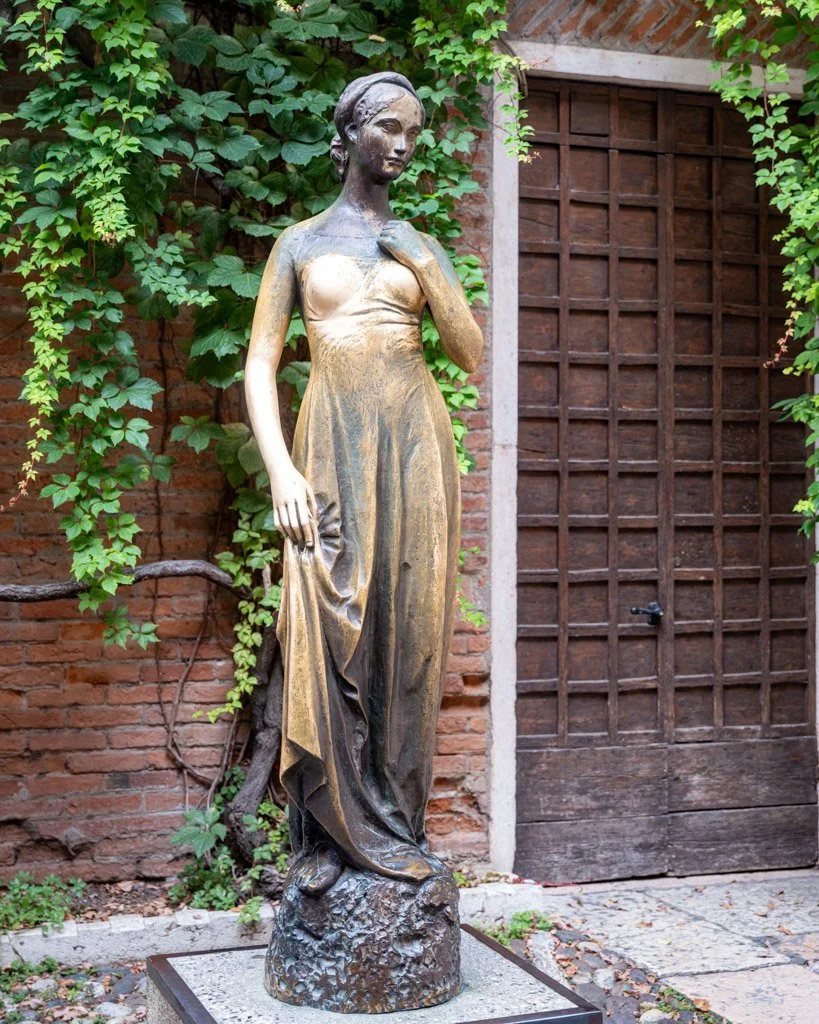
Casa di Giulietta, the Home of Juliet, draws thousands of visitors every day. This is ironic as the Capulets are a fictional family, so this is not a true historic site. The 13th century home belonged to the Dal Cappello family and had fallen into disrepair by the early 1900s. The city purchased and restored the property to resemble the setting imagined in the play, including a small balcony overlooking a courtyard. It was built for tourism and it works. Standing in that courtyard I thought about Mr. Monroe and those cardboard tube swords, and how a seventh grade elective I did not even choose ended up shaping so much of who I became.
In the late afternoons spent time wandering the marketplaces and squares, ducking into shops. Honestly it was more for the air conditioning than interest in what was inside, but occasionally you stumble onto something worth a second look. Every afternoon also brought about a few scoops of gelato. There was even a Romeo and Juliet combination with passionfruit and amaretto.
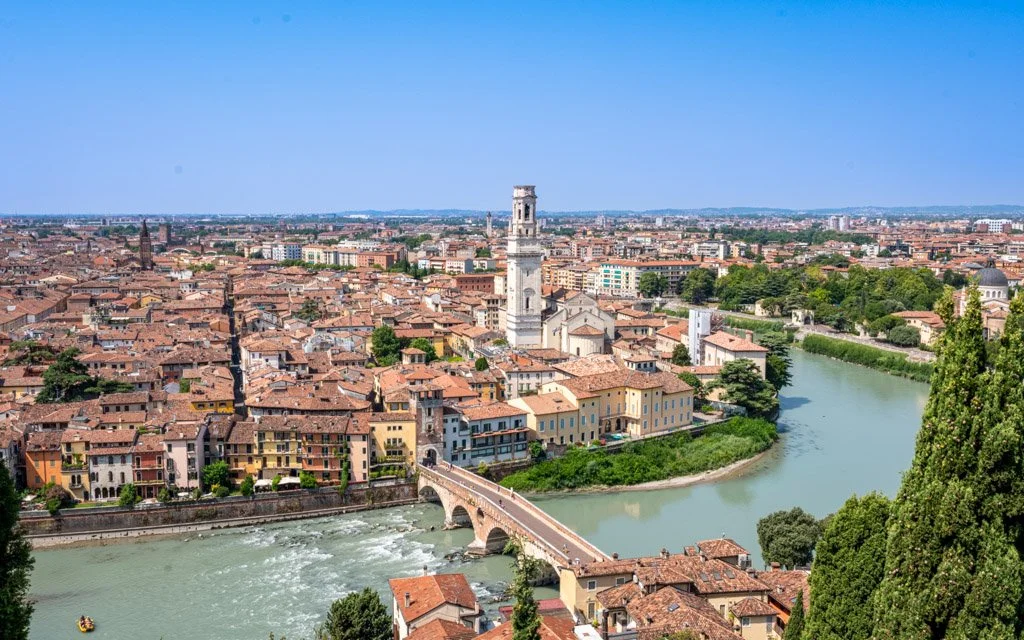
One early morning I crossed a bridge over the Adige River and climbed the more than 200 steps up to Castel San Pietro. The effort is worth it. From up there Verona spreads out below you, the Arena visible in the distance, the river curving around the edge of the old city. Compact, golden and old, exactly as you might imagine it. A perfect place for a photographer to capture the city.
The hotel I found enriched my incredible few days in Verona. The Palazzo Trezza Verona is a new hotel remodeled from a 13th century palazzo into an elegant boutique hotel full of warmth, antiques and old world charm. My room was expansive and richly furnished, larger and better decorated than my first few apartments after college. The staff was friendly and gracious and each morning I sat in the garden courtyard to have my breakfast. As I write this journal, sitting in a room surrounded by artwork and old furnishings, I find myself thinking about Romeo, Benvolio and the Montagues, about what life in a place like this might have felt like four centuries ago. Romeo slipping into a garden. Juliet on a balcony above. Verona has a way of making those old stories feel very close.
I came to this city because of a play I was assigned in seventh grade by a teacher who made it matter. I left richer for both.