
15 Minutes with a Master ~ Viewing of The Last Supper
I have always been fascinated with the Renaissance, from its architecture, music and art. I first heard the word in Junior High, but it was not until an art history lesson in high school that I truly grasped the significance of this remarkable period in history. The whole idea of beauty, of humanism, of finding meaning in the world around us, gave rise to some of the greatest art ever created. Painters, sculptors, musicians, writers, and architects all allowed this era to flourish. And while seeing a famous painting in a book or on a classroom screen is one thing, it is nothing compared to standing in front of it yourself.
When I was planning my trip to Italy, I knew Milan had to be part of it. The city is famous for so many things: its culture, its history, the food, the fashion. Watching the Winter Olympics piqued my interest as a place I had been wanting to visit. One of the most famous works of Renaissance art is The Last Supper painted by Leonardo da Vinci. As someone who went to parochial school, this image appeared in many lesson plans. The moment I booked my flights, I went online to get a ticket. I knew tickets sold out months in advance, and sure enough, my jaw dropped when I saw that viewings were sold out for the entire summer. The only option was to join a tour. One of the quiet perks of traveling solo is that you only need a single ticket, and after searching through a sea of sold out options, I found one tour with exactly one spot available during my time in Milan. I grabbed it.
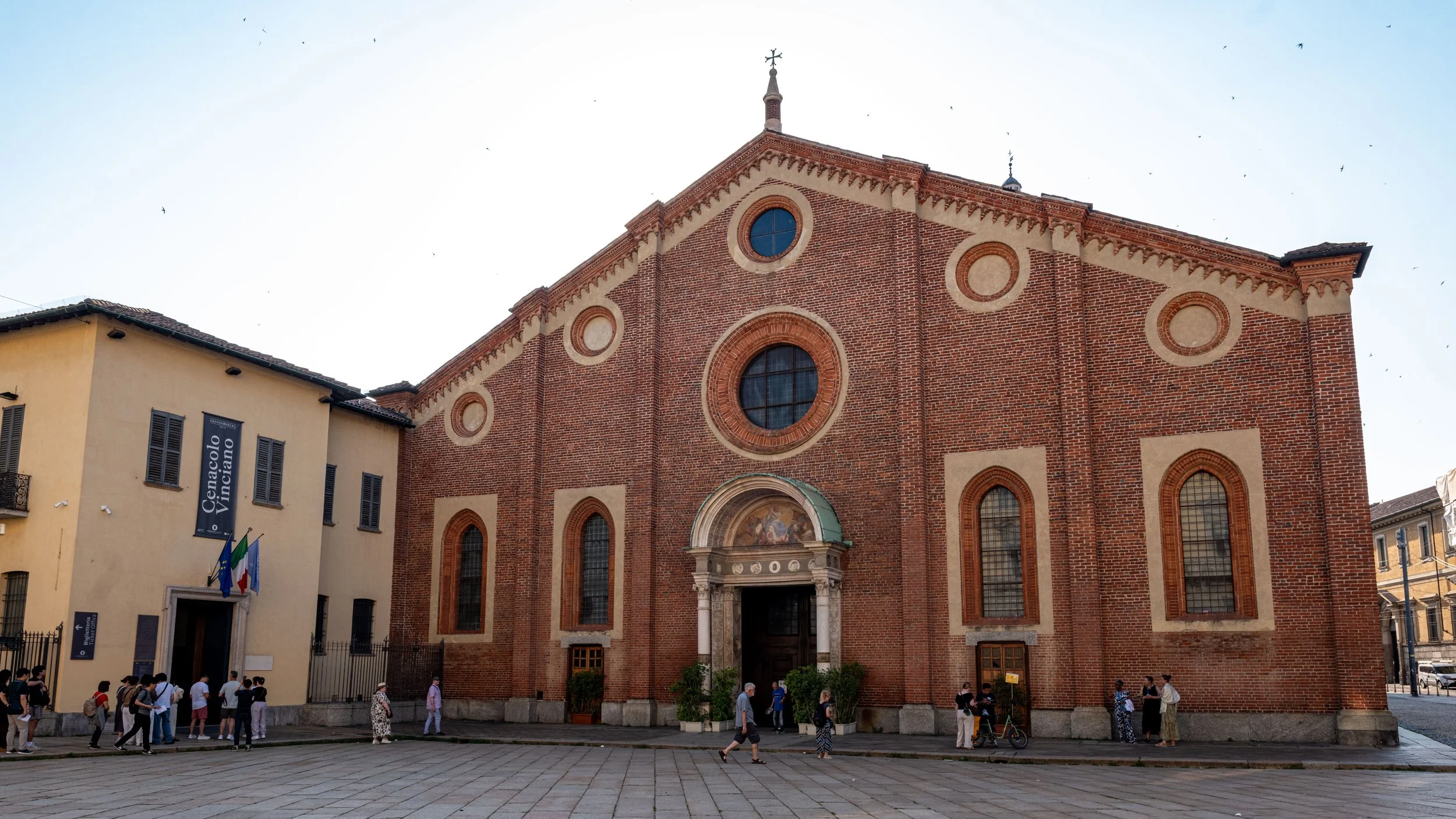
We started early, gathering outside the Dominican convent of Santa Maria delle Grazie. It is a modest building with a beautiful little garden. Three Italian nuns were opening the gate as we arrived, and by the time I got my camera out, they were gone. Without the crowd of tourists, you would never guess this quiet place was home to one of the most famous works of art in the world. The Last Supper is painted on the wall of the dining hall, commissioned by Ludovico Sforza, the Duke of Milan. It took Leonardo four years to complete. He searched tirelessly for the right models to inspire each character, and finding his inspiration for Judas proved especially difficult. The story goes that he eventually found his answer in the prisons of Milan.
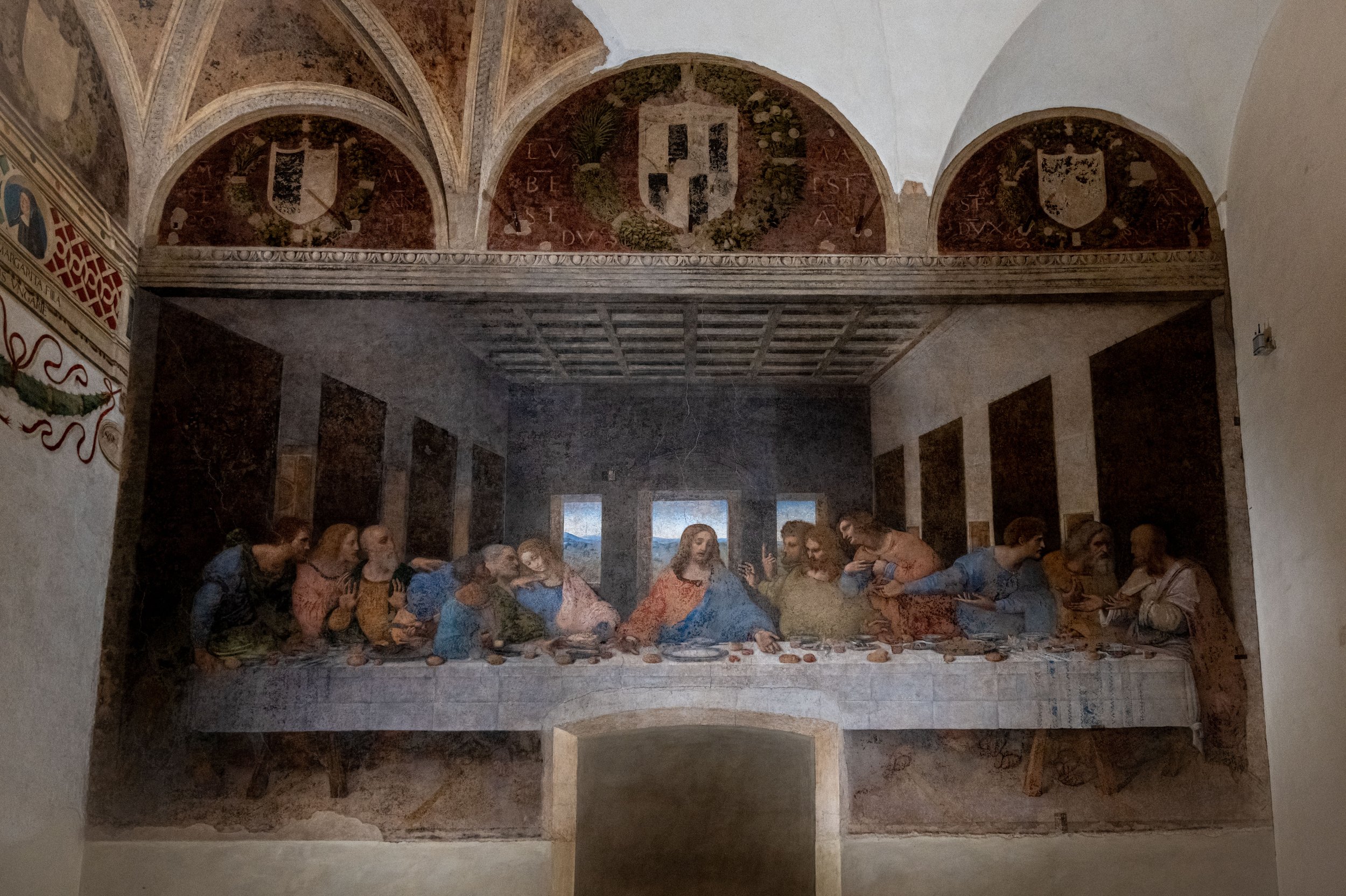
The painting was created with oils directly on the wall, departing from the fresco technique that Leonardo and many artists of the time traditionally used. To help protect it, only a small number of visitors are allowed in at once. When I walked into that humble dining hall and looked up at the wall, I was completely still. My eye went immediately to Jesus. Painted in the Renaissance tradition with light hair and blue eyes, there is a sense of peace in his expression, a quiet calm that stands in contrast to the twelve apostles surrounding him, whose faces reveal worry, shock, and shame. As I moved from face to face, I felt drawn into the moment, into the story itself. As a whole, da Vinci creates something extraordinary. But when you begin to look at each character individually, that is where his genius becomes undeniable. Every face tells its own story, and every story adds to the one being told across the entire wall. I could have stayed for hours. They give you fifteen minutes. Those minutes go by far too quickly.
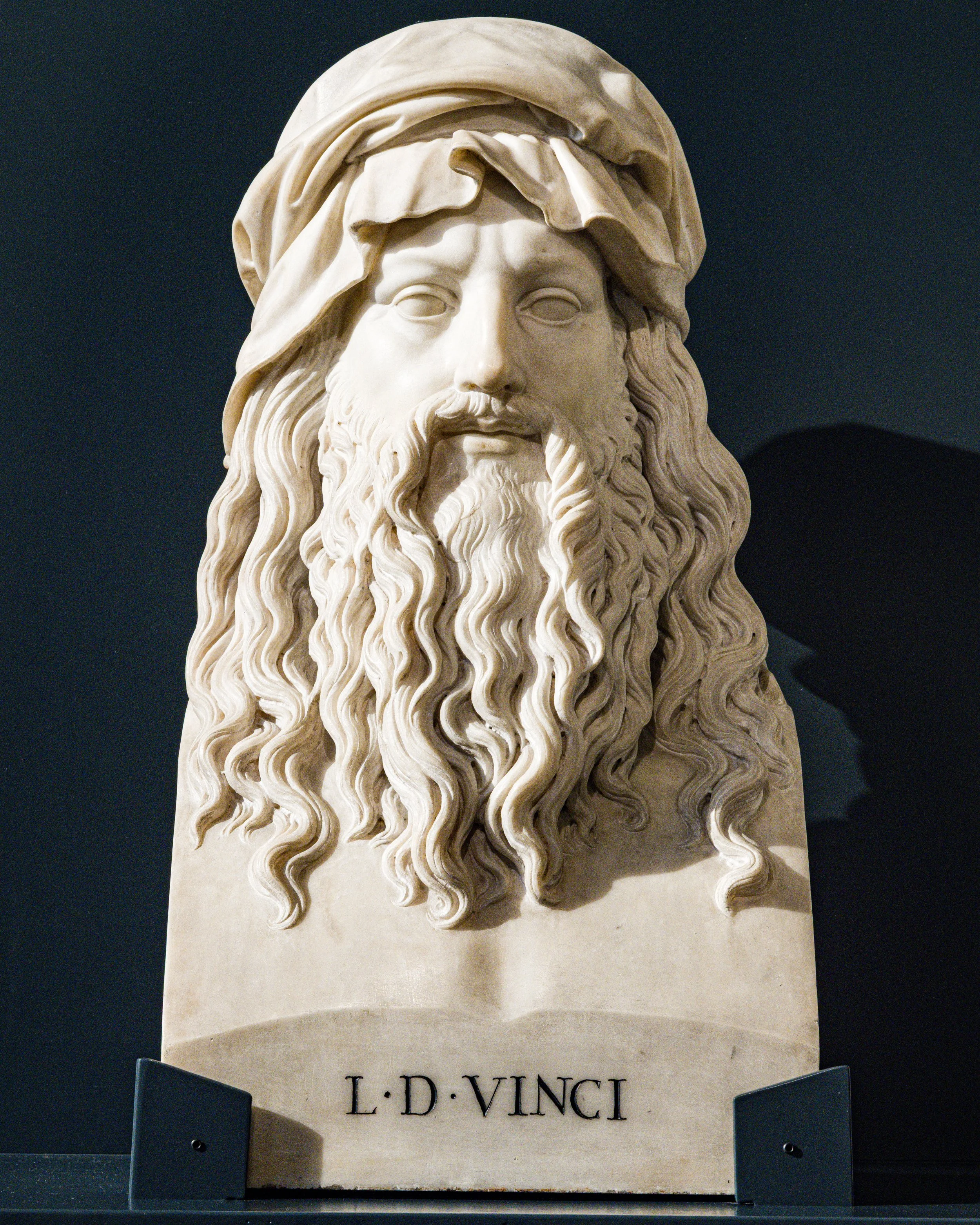
Walking away, I found myself thinking about my own work as an artist. When I direct a theater production, I am asking each actor to tell the same story while making their character entirely their own. The individual and the whole exist at the same time. It is the same with photography. Color, light, framing, composition. Even when photographing objects, they are part of something larger, a visual story being told in a single frame.
In one of my favorite musicals, Sunday in the Park with George, Stephen Sondheim describes the creative act this way:
White. A blank page or canvas. The challenge: bring order to the whole. Through design. Composition. Tension. Balance. Light. And harmony.
I think about those words often in my own work. And standing in front of The Last Supper, I thought about them again. There is a reason da Vinci is considered a master. I found myself wondering whether he ever imagined that centuries later, artists like myself would still be looking at what he created and finding themselves inside it.